Pet Health: Dog and Cat Bathing and Grooming

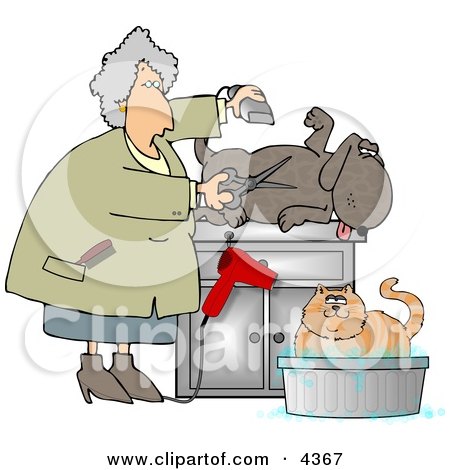
Good pet health includes bathing and grooming of your animal. Dogs and cats, just like people need to be bathed and groomed in order to keep their hair, skin and teeth healthy.  Animals with healthy skin and hair do not need frequent bathing or harsh shampoos - both of these can cause dry itchy skin.  However, animals that have a skin problem require a medicated bath more often in order to reduce bacteria on the skin, irritation, and inflammation and to provide relief. However, it is important to note that each animal is different. 
  • Bathe your pets when they need it, as in when they are smelly, dirty, greasy or have irritated skin. Wash their feet and in between their toes when you bring them back from exercising in fields or dirt grounds.
  • Investigate the breed of your pet and take note of any common skin problems that are found within the breed and take preventative measures as early on as possible.
  • Avoid shampoos with oatmeal.  I realize this may surprise many of you.  It is true that oatmeal is a wonderful soothing ingredient however 80% of dogs are allergic to grain, thus causing a reaction to your dog and his skin.
Often times, a dog will constantly bite at himself and this could be a sign that his skin is irritated.  Sometimes there is only a certain spot on the skin that is irritated which can be treated with creams for dry, irritated skin.  Even Aloe Vera, Vitamin E, or tree tea can help in these cases. If your dog or cat requires a soothing rinse to reduce skin irritation consider a homemade rinse.

ALL RINSES SHOULD NOT BE USED ABOVE THE HEAD AND NECK.  DO NOT GET RINSE INTO ANIMALS EYES OR EARS.  

These rinses are courtesy of Dr Karen Becker, Holistic Veterinarian.

It is preferable that homemade rinses are done in the tub.

For a yeast skin infection consider a vinegar or lemon rinse.   

Disinfecting Vinegar Rinse
  • Add 1 cup vinegar to 1 gallon water.
  • Pour over dog (from the neck down).
  • Rub into skin and towel dry.
  • Do not rinse off.
 Deodorizing Lemon Rinse
    • Cut one lemon in thin slices and boil in one quart water for 10 minutes.
    • Cover and let stand for 3 hours until cool.
    • After shampooing, pour solution over your dog (from the neck down) and massage into skin.
    • Avoid eyes. Towel dry. Do not rinse off.
    Note: Applying lemon rinse to dark-coated dogs can lighten their hair color if they spend lots of time in the sun. This is not a health hazard.
     If your dog or cat is prone to hot spots, skin infections or pimples, try a Povadone Iodine Rinse. 

    Povadone Iodine Rinse
    • Add 1 cup Povadone Iodine (also called “Betadine” or 1% iodine solution from local pharmacies) to 1 gallon rinse water.
    • Pour over pet from the neck down, towel dry and do not rinse off.
    Note: This solution has an iced tea color and will turn white dogs and cats off white. This is not a health hazard.
     If your dog or cat is restless or irritated from generalized itchiness, try an herbal tea rinse. 

    Herbal Tea Rinse
    • Add 5 green, chamomile or Tulsi tea bags to 2 quarts very hot water, steep until water is cool (I recommend 3 hours to allow for the maximum amount of polyphenols to exit the teabag and enter the water).
    • Remove tea bags and pour over pet from the neck down.
    • Massage into skin and do not rinse.
    • You can also refrigerate used tea bags for a soothing topical poultice for hot spots or rashes.
    Hot Tips For A Successful Bathing Experience
    •  Use comfortably warm water, not too hot. On very hot days, or when the weather is fine give your dog his bath outside with cooler water to help reduce inflammation and irritation. Your dog or cat will love it on a hot warm or fine day. 

      Dogs with water-repellent coats (Labradors
      , poodles, retrievers, and Portuguese Water Dogs) are sometimes hard to get really wet, so diluted shampoo or rinses make the job easier.
    •  If the weather outside is cold or nippy do not bathe your dog or cat outside.  Not only is it uncomfortable for him just like it would be for you but your dog or cat can easily get a cold.  Instead bathe indoors with WARM water. Towel dry immediately and keep him indoors until he is completely dry.
    • Be aware of where your pets irritated skin is.  Irritated skin is delicate and easily injured. Your pet may feel uncomfortable at the thought of discomfort so you need to be relaxed and make bath time fun and stress free. Remember that hot spots are extremely painful so blot these areas with a rinse or shampoo soaked sponge instead of pouring water on them.  Wash paws and toes well especially if your pet goes for runs or walks in fields or large plots of dirt land.
    •  If you are bathing your dog or cat with a normal shampoo take great care to rinse his coat thoroughly.  Soap left on skin can be irritating and itchy and will leave an oily build up on your pets hair.
    • Wring out and towel dry well.  Some animals have hair that dries easily while other type hair takes a bit more work.     
     Grooming
    • Human hair dryers are not appropriate unless used with a “NO HEAT” setting! Allow distance between the dryer and the animal. If your pet has hot spots it is preferable you do not use a hair dryer, however if you do be very careful NOT to use any heat at all and avoid the hot spots on your pets skin.
    • Trim back your pet’s fur around any sores or scabby areas to allow air to get to the skin helping the area to dry faster and heal faster.
    • If you decide to take your pet to a groomer do not be afraid to take your own herbal rinses and shampoos for the groomer to use. Ask your groomer to avoid using fragrances and allergic sprays on your pet.
    • Although shaving your pet allows you to keep better tabs on his skin remember that hair is an insulator from the sun and can cause changes to their ability to thermo-regulate, which allows allergens to get closer contact with sensitive skin.
    Good pet health requires proper dog and cat bathing including the use of herbal shampoos for normal skin and rinsing formulas for problem skin, not over bathing and using irrigation therapy when required, as well as a proper diet and regular exercise, your pet has a good chance that his irritated skin problems can be controlled allowing him an itch, irritable, pain free life.

    Keep Fit Tips - Help With Workouts

    Keeping fit, working out, burning fat, cardio fitness and all of the above are regular everyday appointments in the keep fit society worldwide.Maintaining  spice and life in workouts is important in order to prevent boredom and to experience new forms of exercise. But keeping up with the hundreds of exercise videos released, and finding the right ones that suit your needs or keep your interest can be time consuming as well as costly. Not to mention the disappoint that comes when you buy a new workout CD, look forward to trying it out and end up not liking it. Help with workouts comes in many forms and one of them is an entity that can provide fitness buffs with a treasure chest of free to view workouts from other fitness junkies.


    It is for this reason that many people use YouTube to find convenient help with workouts. Those with a busy lifestyle are always looking for faster ways to accomplish their fitness needs for the day and the many videos on YouTube offer quickie yet effective workouts.

    Help with workouts is available to you free on YouTube so take advantage of it!


    Hit up YouTube for help with workouts!

    Anal Gland Problems in Dogs- Stop This Grooming Procedure!

    Pheromones are chemical messengers that help dogs and cats identify each other in the pack. That’s why dogs sniff each other’s butts, or another dogs poop they come across on their walks. The pheromones are released when a dog goes poop supplying much biochemical information needed to communicate with one another.  These pheromones are released via the anal glands found inside the dog or cats rectum.  Anal problems in dogs are common, with the common treatment being performed unnecessarily being the cause.

    Why Anal Problems in Dogs?

    The anal glands inside the rectum have a tiny duct that leads out to the anus. When the dog or cat goes poop feces enters the rectum, the colon expands, and these glands squeeze a little pheromones on the feces. When the duct that drains the anal gland becomes swollen shut creating anal problems in dogs. In a nutshell what happens is that the muscle that does the work becomes weak from not operating on it's own, and therefor cannot perform on it's own. The area becomes agitated and swollen shut.


    When your groomer provides your pet the service of excreting his anal glands he is playing with fire and your pets health and well being is on the line and so is your hard earned bucks because this procedure actually creates unnecessary trauma to the anal gland.  Whether it's your groomer or your vet, excreting your dog or cats anal glands is a procedure you need to ensure your groomer and vet do not do.


    In cases where there is an underlying inflammatory condition or low-grade infection that’s already in the anal gland, sometimes gentle manipulation by an experienced veterinarian is necessary. It is extremely important that your vet knows when to stop squeezing so as to help the anal gland keep it's muscle tone so it can work on it's own accord preventing anal problems in your dog.
    If anal gland muscle tone is lost through regular expression, do not have your veterinarian or groomer automatically express the glands. Tell your vet to check the glands regularly and to determine if the glands are of normal size, not too full, and whether the duct is working properly. In that case, it is best to leave them alone.

     The GI Tract and Other Organs

    Inflammation of the GI tract is the second runner up for anal gland problems in cats and dogs. It is important to remember that any disease in the gastrointestinal tract also effects the anal glands. For example Inflammatory Bowel Disease, Allergic Gastritis, allergies, and Allergic Colitis can all effect the anal glands in your dog or cat.

    Another one is anything that can cause soft stools. This could be medications, parasites or antibiotics. Firm stools are required to apply pressure against the colon wall that allows the anal glands to express pheromones. A pet having regular or recurrent soft stools or diarrhea often can cause anal gland problems. The problem behind the soft stools needs to quickly be addressed and not left unattended.

    Pet Allergies

    If your pet is sensitive to allergens within his surroundings it is likely that anal gland problems can arise by causing tremendous itching to the anus making your dog or cat bite and scratch, causing the area to become irritated. If you think you have an allergenic pet you need to have the cause of the allergies investigated and controlled in order to eliminate the anal gland problem.
      
    Ergonomic Problems

    Ergonomic problem refers to anal glands set abnormally deep. When a dog or cat has anal glands placed to low inside, even healthy stools cannot suffice and effectively empty the pheromones during bowel movements. Once again, the anal glands in this case need to be regularly checked my the vet in order to determine if they need to be expressed manually.

    Only extreme circumstances require the surgical removal of anal glands, but according to Dr. Karen Becker, Holistic Veterinarian this surgical procedure under the surgical definition of a "Salvage procedure", meaning it can host a whole other basket of complications.

    The first issue at hand in treating anal problems in dogs is for the owner to identify the root problem causing the anal glands to swell. Determine if the problem is an inflammatory one or an allergic one, or soft stool. If your pet does not have anal gland problems make the choice to eliminate anal gland expression in your pets life so as to preserve the muscle and do away with anal gland problems in the future. Only in extreme circumstances of your pet needing relief, determined by a vet, should you have anal gland expression performed.


    Dog Athritis and Joint Degenerative - Causes and Protections

    Arthritis or Degenerative Joint Disease is a major contributor to musculoskeletal degeneration in dogs and other pets. Osteoarthritis, or Degenerative Joint Disease contributes to the degeneration of your dog's frame, a sight that is heart breaking for any dog owner.  Let's not even mention the severe discomfort a dog is in when dealing with this disease and how  quickly the disease escalates.  Medication will only work for a short time.  Many dog owners are faced with the dilemma of putting their dog to sleep when the disease becomes unbearable for their dog to handle. 

    The Main Causes of Arthritis
    • Cartilage degenerative : A genetic predisposition to malformation of the joints, such as hip dysplasia in dogs that can cause early joint degeneration.
    • Poor nutrition: High calorie carbohydrate-based diets can cause the body to grow faster than the cartilage does, inducing cartilage deficits.
    • Autoimmune diseases in which your pet’s body attacks its own joints.
    • Infectious diseases: Bacterial infections in the joints can trigger degeneration, as well as tick borne infections that spread to the joints.
    • Trauma (known or unknown).
    Early Trauma or Injury Can Lead to Joint Disease Later

    Trauma at an early age is an overlooked source of joint disease in dogs and cats.  A sudden movement that causes the head to jerk backward can cause cervical injury often gone unnoticed.  Pet trainers often recommend the owner jerk the dogs leash to get him to stop pulling.  Dr. Karen Becker, wellness veterinarian does not agree with this method because it can cause cervical trauma which later causes an early onset of joint disease and degenerative .  These early traumas go often go unnoticed and add up over a period of time.

    Arthritis Preventative Measures
    • If your pet sustains an injury of any type, consider chiropractic care to help realign the spine and Central Nervous System. This will help prevent any future problems arising from your dog or cat's body shifting into an unhealthy position to compensate for his injury.
    • Another important factor is preventing dog arthritis and joint degenerative is regular exercise.  It is imperative that your dog has plenty of exercise on a daily basis. 

      You can kill two birds with one stone and socialize your dog and get him some exercise at the same time by providing him a play time with other dogs, either at the park or in a private setting.  You yourself should walk your dog daily and ensure he knows how to walk properly on a leash. A great exercise for dog and owner alike is to ride a bicycle with your dog on a leash.  It takes a little practice so start off slow but once you and you dog master it it is an extremely enjoyable experience and a heck of a lot more enjoyable than running the treadmill at the gym.

      Utilize the yard space that you have and teach your dog the come command and play the "Come Game." You need two people for this game, stand far apart, and call your dog to come (follow the instructions for teaching the command). Your dog will get exercise running back and forth between you and the other person, while at the same time getting praise each time he follows your command to come.  Once again you are also killing two birds with one stone - exercise and obedience.
    In order for dog owners to protect their beloved animals from arthritis and joint degenerative they must first ensure they do not unknowingly cause trauma to their dog especially during training sessions and leash walks.  It is here that you need to train your animal to walk nicely on his leash so that he is not pulling you or trying to dart away on his leash, causing harm to himself. Pet owners need to ensure that chiropractic treatment, massage, and stretching is put into place when injury occurs, even if your dog shows no signs of pain or discomfort. It is wise to do stretching and massage weekly just in case an injury occurs you are not aware of. Regular exercise and proper obedience training should be actioned by every pet owner to ensure a healthy, strong, socialized, obedient pet.